
A toothache that keeps you up at night, a sensitivity that flares with every sip of coffee, a swelling that wasn’t there last week; these are your body’s way of sending an urgent message. When infection reaches the inner pulp of a tooth, the discomfort can be relentless, and ignoring it only gives the problem more time to spread. The good news is that a root canal is not the ordeal it’s been made out to be; it’s the solution.
At All Smiles Dentistry in Lake Stevens, WA, Dr. Jason Steinhubel has focused on endodontics throughout his career, making root canal therapy one of his core areas of expertise. His approach combines precision, advanced technology, and genuine care for each patient’s comfort. The practice uses microscope dentistry, digital imaging, and 3D cone beam technology to ensure thorough, accurate treatment, giving your tooth the best possible chance at a full and lasting recovery. As one of the most trusted restorative dentistry options available, root canal therapy allows patients to keep their natural tooth rather than face extraction.
Inside every tooth, beneath the hard enamel and dentin, lies a soft tissue called the pulp. This pulp contains nerves, blood vessels, and connective tissue that help the tooth develop. When decay, a crack, or repeated dental procedures allow bacteria to reach the pulp, an infection can develop. Left untreated, this infection can spread to the surrounding bone and tissue, creating a much more serious health issue.
Root canal therapy removes the infected or inflamed pulp, cleans and shapes the interior canals, and seals the tooth to prevent reinfection. The tooth is then typically restored with a crown to protect its structure and restore normal function.
You don’t always need to wait for unbearable pain to seek evaluation. Several warning signs point toward pulp involvement, including:
Not every case presents with obvious symptoms, which is why regular dental exams matter. If any of these signs are familiar, the sooner you are evaluated, the better the outcome is likely to be.
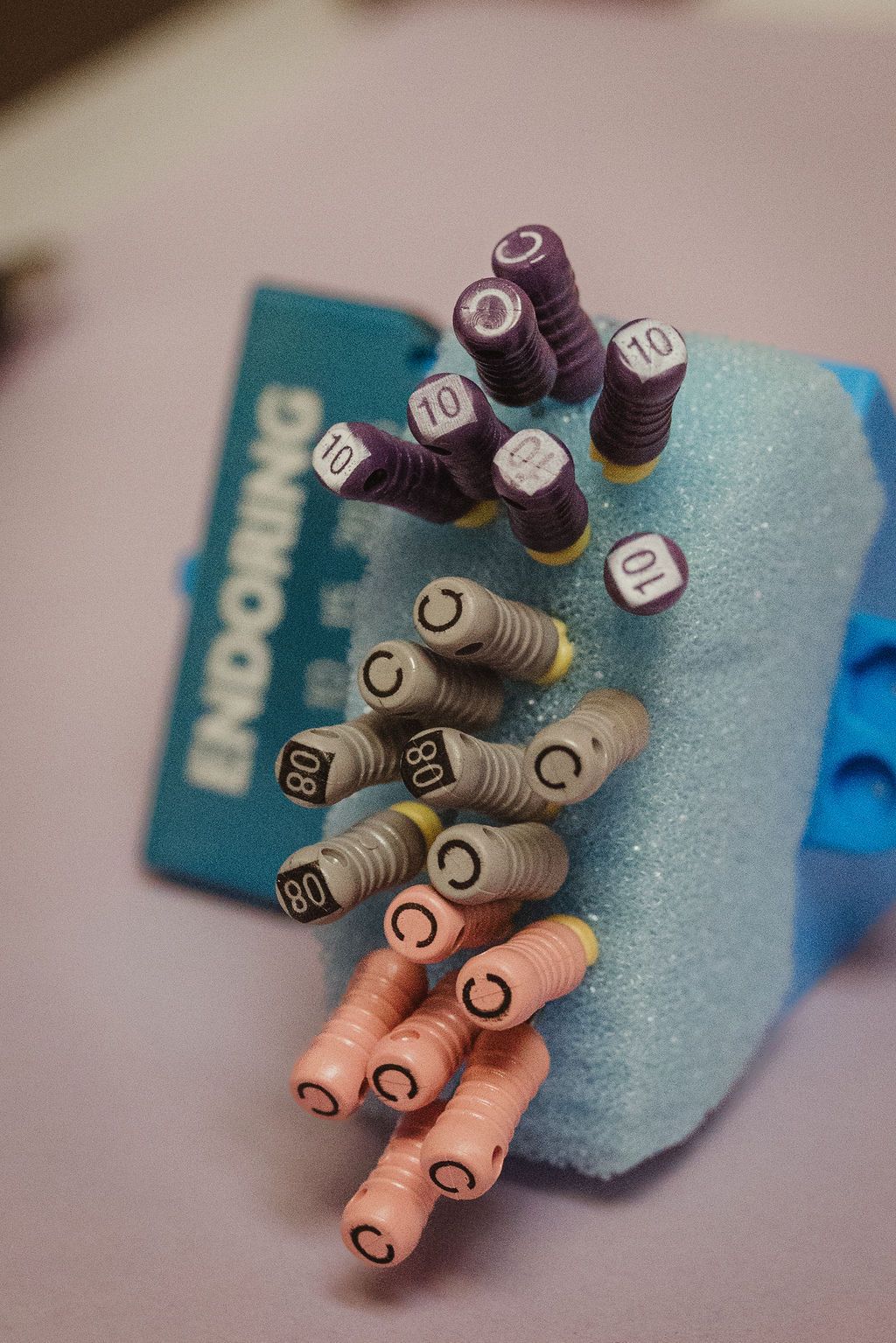
Many patients are surprised to discover that a root canal feels much like getting a filling. Local anesthesia numbs the area thoroughly before treatment begins, and for patients who feel anxious, sedation dentistry options are available to keep the experience calm and manageable. The procedure itself involves creating a small access point in the tooth, carefully removing the infected pulp, and then cleaning and shaping each root canal with precision instruments.
Dr. Jason uses microscope dentistry during root canal procedures, which provides a level of magnification that allows for exceptional detail and accuracy. Digital X-rays and 3D cone beam imaging give a complete picture of the tooth’s anatomy before treatment begins, helping to identify even narrow or curved canals that can otherwise be missed. This thorough diagnostic approach means that the treatment addresses every source of infection rather than leaving any behind.
Once the canals are cleaned and shaped, they are filled with a biocompatible material and sealed. Most patients then proceed to have a dental crown placed to protect the restored tooth from future fracture. Research published through the National Institutes of Health found that endodontically treated teeth can achieve survival rates of 84% to 97% over several years when properly restored, a strong case for saving a tooth rather than removing it.

When a tooth is severely infected, some patients wonder whether extraction might be the simpler route. While tooth extractions are sometimes necessary, preserving your natural tooth through root canal therapy is almost always the preferred first option. Natural teeth provide stability for surrounding teeth, help maintain jawbone density, and allow you to chew and speak without disruption.
Replacing a missing tooth with an implant or bridge requires additional procedures, time, and investment. Root canal therapy, followed by a protective crown, often delivers a long-term solution at a lower overall cost and with less disruption to your oral health overall. A crown placed after a root canal also integrates naturally with surrounding teeth; patients often note that it looks and feels just like their original tooth. If a tooth has already been compromised and requires both endodontic treatment and structural repair, crowns and bridges can be part of a coordinated restorative plan.
Dr. Jason Steinhubel opened All Smiles Dentistry more than two decades ago with a clear purpose: to give the Lake Stevens community a better dental experience. His background includes deep experience in endodontics, and the practice’s state-of-the-art technology means patients receive precise, thorough care in a comfortable, community-focused environment. The team at All Smiles Dentistry is small enough to know every patient by name and committed enough to take the time to explain every step of treatment. Learn more about Dr. Jason’s background and approach to see why patients across Lake Stevens and the surrounding area continue to trust him with their dental health.
If tooth pain or sensitivity has been building, don’t wait for it to get worse. Root canal therapy is a proven, effective way to relieve pain, eliminate infection, and keep your smile intact for years to come. The practice accepts Delta Dental, Regents, and Primera, and also works with patients carrying out-of-network benefits through Cigna, Aetna, Guardian, and Standard. Cherry and CareCredit financing options are available for those who want to spread out treatment costs. When you’re ready to take the next step, contact our office to schedule your appointment.
The thought of a root canal to save your natural tooth may sound scary and cause anxiety, but that’s probably because of what you’ve heard in the past. The truth is root canal therapy has come a long way in technique, technology, and materials.
Microscopic dentistry enables our Lake Stevens dentist to get greater insight to your issue and perform a comfortable root canal. Many patients say it’s comparable to a tooth extraction in that it’s painless, but you may feel some very mild discomfort.
After applying a local numbing agent, you won’t feel the area as we gently treat your infected tooth. You may notice some slight pressure and an occasional tug, but that’s all very quick and minor.
Remember that root canals have the power to save your natural smile and are an investment in your long-term oral health. On the other hand, an extraction for a tooth beyond repair requires multiple appointments (tooth removal, restoration creation, and placement).
If our team at All Smiles Dentistry determines you need a root canal treatment, then we’ve discovered bacteria inside the tooth or know you’re at risk due to tooth damage.
Believe it or not, it’s very common for root canal issues not to cause much pain early on, especially if you take pain relievers. However, the infected tooth root produces more serious pain once the issue progresses.
Unfortunately, advanced tooth decay or damage that spreads may require an extraction vs. root canal therapy. This is why it’s so important to visit your dentist at least twice a year for dental exams and professional cleanings.
The sooner we spot an issue, the easier, faster, and less expensive it is to fix. It’s never too late to get your dental health back on track, so please schedule an appointment with our Snohomish County dentist.
The cost of a root canal depends on your treatment and insurance coverage. However, it’s a cheaper and more comfortable option than a tooth extraction and replacement with a bridge or implant. The latter takes more time and effort.
Please schedule a consultation today to learn more about how much a root canal costs in Lake Stevens, WA.
Your root canal therapy may be covered by insurance, depending on your level of coverage. In most cases, dental insurers classify root canals as necessary procedures and provide coverage.
Please contact us directly to find out how much your procedure may cost and how we can assist with your claim.
Typically, recovery takes about one to two days. Our dentist may recommend an OTC (over-the-counter) pain reliever to manage any discomfort after your anesthetic wears off.
Our dental team also explains how to best care for your tooth at home and if you need to schedule a follow-up visit. We’ll equip you with the tools for happy healing outside of the office.
In most cases, a root canal requires a tooth cover to protect your tooth and restore function for chewing. This cover is a custom-made dental crown adhered onto your tooth, which looks and feels natural.
Nobody has to know about your procedure unless you tell them!
Our team always listens to your concerns and gets to know you before customizing your experience to your needs. We want to ensure your comfort while bringing you the best treatments modern family dentistry has to offer.
Feel relaxed at your Lake Stevens dentist as our team takes great care of you. If you’re feeling nervous, our nitrous oxide or conscious sedation options can put you at ease. We’re in good hands here. Feel relaxed at your Lake Stevens dentist
Each time you visit, expect the same level of high-quality care with modern technology and your own dedicated provider. Discover more effective and gentle dentistry with digital imaging, lasers, same-day crowns, and more.

Dr. Jason Steinhubel opened All Smiles Dentistry in Lake Stevens in 2004 to give the community he loves a better dental experience. A member of the American Dental Association, he brings a background in forensics, dental assisting, and dental lab work to a technology-forward, family-focused practice built on prevention, education, and comprehensive care under one roof.
View Dr. Steinhubel's full profile