
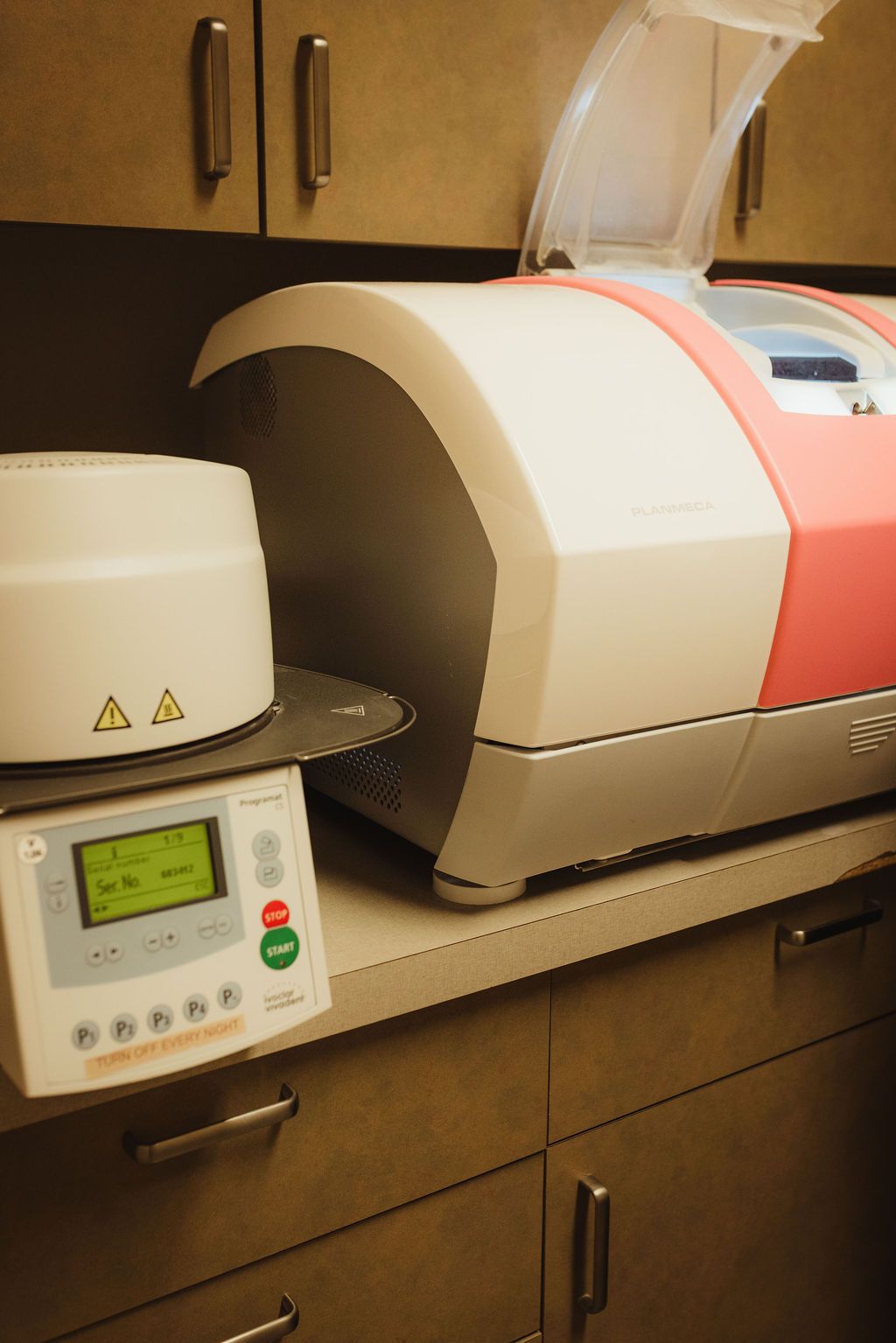
A tooth can handle decades of daily wear, but sometimes damage runs deeper than a filling can fix. Decay may have taken too much structure, a crack may have weakened a molar, or a root canal may have left a tooth fragile. Think of a dental crown as a well-fitted helmet for that tooth: it surrounds what remains, absorbs the force of chewing, and lets the tooth keep doing its job. Crowns can also anchor a dental bridge that replaces a missing tooth.
At All Smiles Dentistry in Lake Stevens, WA, Dr. Jason Steinhubel has cared for this community for more than two decades. We combine digital impressions, 3D cone beam imaging, and intraoral cameras with a focus on your comfort and long-term health. Crowns and bridges are part of our restorative dentistry services, which are designed to meet patients where they are.
Not every damaged tooth needs a crown, but when a tooth has lost a lot of structure, a crown is often the most reliable way to protect it. Small problems tend to grow when care is delayed, so catching them early gives you more options.
A crown may be recommended in several situations. These are the ones we see most often:
Every situation is different, and we review your imaging and talk through your options before recommending treatment.
Digital impressions and advanced imaging capture precise measurements without the gagging and mess of traditional putty trays. That accuracy helps your crown fit your bite more predictably from the start.
Your dentist will recommend a material based on the tooth, your bite, and your goals. This general guide shows how common options compare.
| Material | Appearance | Strength | Good to know |
|---|---|---|---|
| All-porcelain or ceramic | Closest match to natural enamel | Moderate | Often chosen for visible teeth. |
| Zirconia | Tooth-colored | High | A strong option for back teeth. |
| Porcelain fused to metal | Tooth-colored surface over a metal base | High | The porcelain layer can be more prone to chipping than all-porcelain. |
| Metal alloy or gold | Metallic | Very high | Typically used where strength matters most and appearance matters less. |
| Resin | Tooth-colored | Lower | Usually costs less but wears down faster than other materials. |
We will explain which materials are right for your tooth and how each one affects cost before you decide.
Knowing what happens during a crown procedure can ease a lot of worry, and our team keeps your comfort first at every stage. We numb the area before we begin, and if you feel nervous about dental work, nitrous oxide sedation is available to help you stay relaxed.
At your first visit, the tooth is gently shaped to make room for the crown, a digital impression captures the preparation, and a temporary crown protects the tooth while your permanent crown is made. At the second visit, we check the permanent crown against your bite, bond it in place, and make sure it blends with the teeth around it. Most people return to normal activity soon afterward, though the tooth can feel sensitive to hot and cold for a short time.

A crown is durable, but it works best when you treat it like a natural tooth. Brush twice a day, floss daily, and avoid habits like chewing ice. If you grind your teeth at night, a custom night guard can protect both the crown and the teeth around it. The National Library of Medicine’s MedlinePlus reports that most crowns last at least 5 years and can last 15 to 20 years, depending on the material and how well they are cared for.
During routine dental exams, we check the edges of your crown, look at the surrounding gum tissue, and make sure everything is working as it should. Keeping up with those visits is one of the best ways to protect the tooth underneath.
It can be alarming, but it is usually fixable. Here is what to do.
Grinding, chewing ice, and decay under the crown are common reasons a crown loosens, and your dentist can check for each one.
When a tooth is missing, a bridge fills the gap with a replacement tooth supported by crowns on the neighboring teeth. These are the main types, and our dental bridges page explains the process in more detail.
Which type fits depends on the health of the neighboring teeth and your bite, which we review at your exam.
Cost is one of the most common worries, and you should know where you stand before treatment begins.
You will receive a cost estimate before treatment starts, so there are no surprises.
Choosing where to receive restorative care matters. You want a team that listens, a dentist who takes the time to explain your options, and a technology-forward office that gives you confidence in the plan. Dr. Jason opened All Smiles Dentistry in 2004 to give the Lake Stevens community a better dental experience built on quality over volume, personal connection, and modern care.
Our patients receive comprehensive care under one roof, from general and family dentistry to advanced restorative procedures. We are contracted with Delta Dental, Regents, and Primera, and we welcome out-of-network benefits from plans such as Cigna, Aetna, Guardian, Standard, MetLife, Principal, BCBS, UnitedHealthcare, TRICARE, and VA with pre-authorization. You can see more on our insurance page, and we offer Cherry financing first, with CareCredit available as another option. You can meet our Lake Stevens team before your visit, and when you are ready, schedule your crown or bridge consultation.
Neither is better for everyone, because they solve different problems. A crown covers and protects one damaged tooth that is still in place, while a bridge replaces a missing tooth by using crowns on the teeth beside the gap. After an exam, your dentist can tell you which fits your situation. You can read more about dental bridges.
How long they last depends on the material, your bite, whether you grind your teeth, and how well you care for them. With good home care and regular checkups, a crown or bridge can serve for many years, and checkups let us spot wear early, before it turns into a bigger problem.
Crowns usually cost less than bridges because a crown covers one tooth, while a bridge replaces a missing tooth and uses crowns on the teeth beside it. The final cost depends on the material, the tooth, and your insurance. We give you a cost estimate before treatment, and we offer Cherry financing, with CareCredit as another option, so cost does not have to stand in the way of care.
A bridge relies on the neighboring teeth for support, so those teeth are shaped to hold crowns. If a bridge does not fit well, plaque can collect under the crowns and put those anchor teeth at risk of decay. That is why careful fitting and daily cleaning around the bridge matter. We can talk through the pros and cons for your situation at a consultation.
We numb the area before we begin, so you should not feel pain during the procedure, and nitrous oxide sedation is available if you feel anxious. Your tooth may feel sensitive to hot and cold for a short time afterward, and we review aftercare with you before you leave.
Call our office right away, keep the crown in a clean container, and bring it with you. Chew on the other side and avoid sticky foods until you are seen. Please do not try to glue it back yourself, because that can trap decay or damage the tooth.
Our team always listens to your concerns and gets to know you before customizing your experience to your needs. We want to ensure your comfort while bringing you the best treatments modern family dentistry has to offer.
Feel relaxed at your Lake Stevens dentist as our team takes great care of you. If you’re feeling nervous, our nitrous oxide or conscious sedation options can put you at ease. We’re in good hands here. Feel relaxed at your Lake Stevens dentist
Each time you visit, expect the same level of high-quality care with modern technology and your own dedicated provider. Discover more effective and gentle dentistry with digital imaging, lasers, same-day crowns, and more.

Dr. Jason Steinhubel opened All Smiles Dentistry in Lake Stevens in 2004 to give the community he loves a better dental experience. A member of the American Dental Association, he brings a background in forensics, dental assisting, and dental lab work to a technology-forward, family-focused practice built on prevention, education, and comprehensive care under one roof.
View Dr. Steinhubel's full profile