
A tooth that once seemed fully healed after a root canal can sometimes act up again months or even years later, leaving you wondering what went wrong. The good news is a second chance at saving that tooth is often possible through a process called endodontic retreatment.
At All Smiles Dentistry, we help Lake Stevens patients understand their options when a previous root canal does not fully resolve, using root canal therapy as our foundation and adjusting our approach based on why the original treatment did not hold. Our goal is to give you a realistic and comfortable way to handle things rather than jumping straight to extraction.
A root canal can fail for a handful of reasons, and none of them mean you did anything wrong. Narrow or curved canals can be difficult to fully clean during the original procedure, and new decay or a cracked filling can allow bacteria back into the tooth over time. In other cases, the crown or restoration placed after the root canal does not seal the tooth tightly enough, giving bacteria a new way in. A tooth can also develop a new crack over time, which creates an entirely separate pathway for infection even if the original treatment was done well.
Symptoms of a failing root canal can be very subtle at first. You might notice lingering sensitivity, a dull ache when biting down, or swelling near the gum line months or years after your original treatment. Some patients also notice a small bump on the gum that comes and goes, which is often a sign of a drainage point for infection beneath the surface. Since these signs can be easy to dismiss, we recommend scheduling an exam as soon as something feels off rather than waiting for the discomfort to worsen.
We rely on our 3D cone beam imaging and microscope dentistry to get a clear, detailed view of the tooth before recommending retreatment. Cone beam imaging lets us examine the root structure from every angle, while the surgical microscope allows for close inspection of canals that may have been missed or incompletely cleaned during the first procedure. Together, these tools help Dr. Jason Steinhubel make an informed decision rather than guessing at what went wrong.
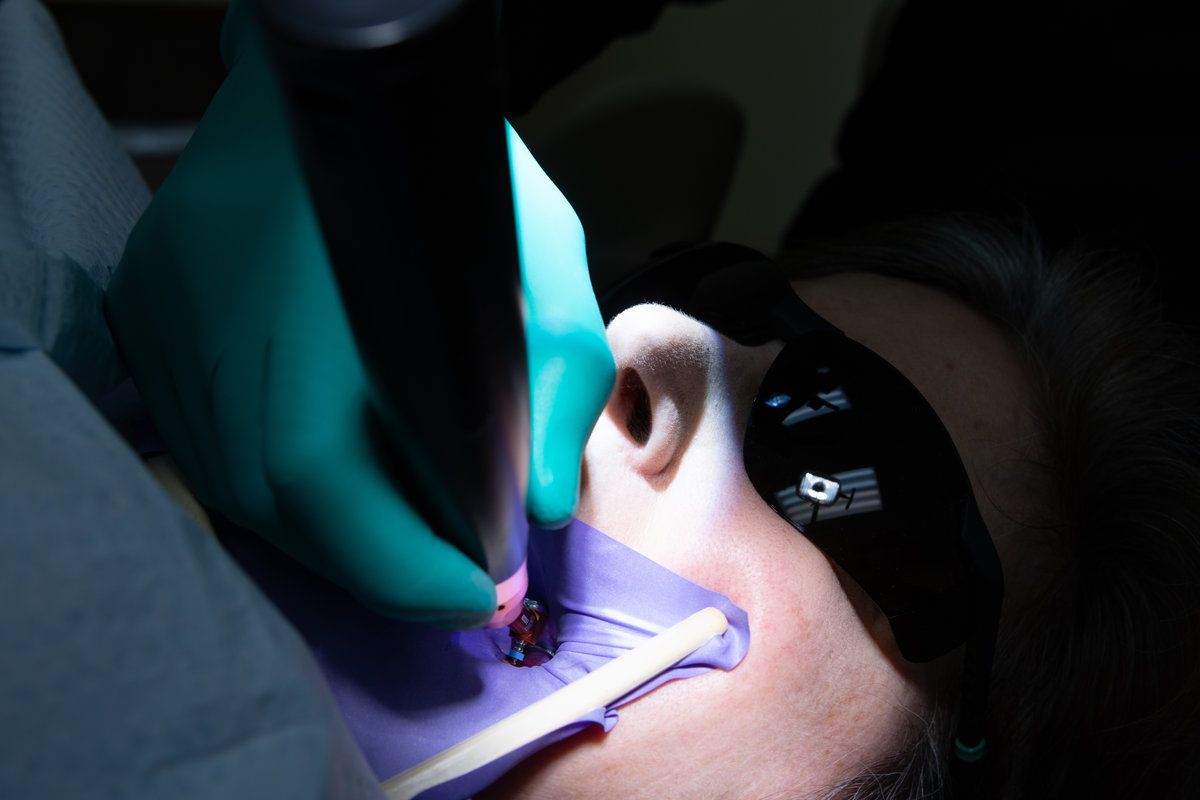
Think of retreatment like fixing a leaky pipe you thought was already sealed. Rather than tearing out the whole wall, a plumber goes back in through the original access point to find and correct the specific issue. Retreatment for a root canal works the same way. We reopen the tooth through the existing access point, remove the old filling material, clean the canals more thoroughly, and reseal the tooth with fresh material before placing a new restoration. In some cases, we also identify and treat an extra canal that was never located during the original procedure, which can be the missing piece behind a tooth that never fully healed.
Research on this topic supports why retreatment is often worth attempting before considering extraction. Recent research on retreatment outcomes has reported success rates ranging from roughly 75% to the high 80s, depending on the specific factors involved in each case. While every tooth is different, these numbers reflect how often a second attempt can successfully save a tooth that did not heal the first time. This is part of why we generally recommend giving retreatment a real chance before moving toward extraction, since a saved natural tooth almost always functions better long-term than a replacement.
For patients who want a clearer step-by-step picture, endodontic treatment during a retreatment visit generally follows a similar sequence, though the exact approach can vary depending on your specific tooth and its history.

Dr. Steinhubel has treated root canals for more than two decades, including advanced cases most general dentists rarely encounter. That background matters most when a tooth needs a second look, since retreatment cases are often more technically demanding than a first root canal.
We also understand this news can bring back some anxiety, especially if your first root canal was not a comfortable experience. Retreatment today typically involves less discomfort, with most patients describing the recovery as similar to a routine filling. Choosing to retreat a tooth rather than extract it also helps preserve your natural bite and jawbone structure, which can save you from needing a bridge or implant down the road. If extraction ever becomes the better option for your situation, we also offer dental implants and full mouth reconstruction as part of our comprehensive restorative care.
Every retreatment case is different, and the right strategy depends on the specific reason your original root canal did not fully heal. We start with a thorough exam, walk you through what our imaging shows, and build a plan around saving your natural tooth whenever it is a realistic option. Our team also reviews your insurance and financing options upfront, including Cherry and CareCredit, so cost concerns do not stand in the way of saving your tooth.
If you are dealing with a tooth that hurts again after a previous root canal, our team is ready to help you understand what is going on and what comes next. Contact our office in Lake Stevens today to schedule your consultation and let us help you get the relief you need.
Some patients notice lingering sensitivity, an ache when biting down, swelling near the gum line, or a small bump on the gum that keeps coming back. If any of these sound familiar, an exam can help confirm whether retreatment may be a good option for your tooth.
Retreatment is generally performed under local anesthesia, and most patients describe the experience as similar to having a deep filling placed. Mild soreness afterward is common for a day or two and is typically manageable with over the counter pain relief.
A first root canal treats a tooth’s canals for the first time, while retreatment involves reopening the tooth through its existing access point, removing the old root canal filling material, and re-examining the canals for anything that may have been missed. In more complex situations, a dentist may recommend endodontic surgery, such as an apicoectomy, as an alternative when nonsurgical retreatment is not expected to fully resolve the issue.
The cost of endodontic treatment can vary depending on the complexity of the case and whether a new crown filling or restoration is needed afterward. Many dental insurance plans provide at least partial coverage, and reviewing your plan details on our insurance page is a good place to start. For patients weighing out of pocket costs, options like dental financing and payment plans may help make treatment more manageable.
In some cases, a tooth may not respond to nonsurgical retreatment or endodontic surgery, and extraction may become the more realistic option. A 2025 cohort study on nonsurgical retreatment of endodontically treated teeth, published through the National Institutes of Health’s PubMed Central, offers additional context on how these outcomes are generally evaluated over time. If extraction is recommended, options such as dental implants can help restore function afterward.
The right option generally depends on factors like how much healthy tooth structure remains, whether the canals can be adequately cleaned and resealed, and the extent of any infection present. An exam with imaging is typically the most reliable way to determine which path may work best, and our team can walk you through the reasoning behind the recommendation.
Our team always listens to your concerns and gets to know you before customizing your experience to your needs. We want to ensure your comfort while bringing you the best treatments modern family dentistry has to offer.
Feel relaxed at your Lake Stevens dentist as our team takes great care of you. If you’re feeling nervous, our nitrous oxide or conscious sedation options can put you at ease. We’re in good hands here. Feel relaxed at your Lake Stevens dentist
Each time you visit, expect the same level of high-quality care with modern technology and your own dedicated provider. Discover more effective and gentle dentistry with digital imaging, lasers, same-day crowns, and more.

Dr. Jason Steinhubel opened All Smiles Dentistry in Lake Stevens in 2004 to give the community he loves a better dental experience. A member of the American Dental Association, he brings a background in forensics, dental assisting, and dental lab work to a technology-forward, family-focused practice built on prevention, education, and comprehensive care under one roof.
View Dr. Steinhubel's full profile