
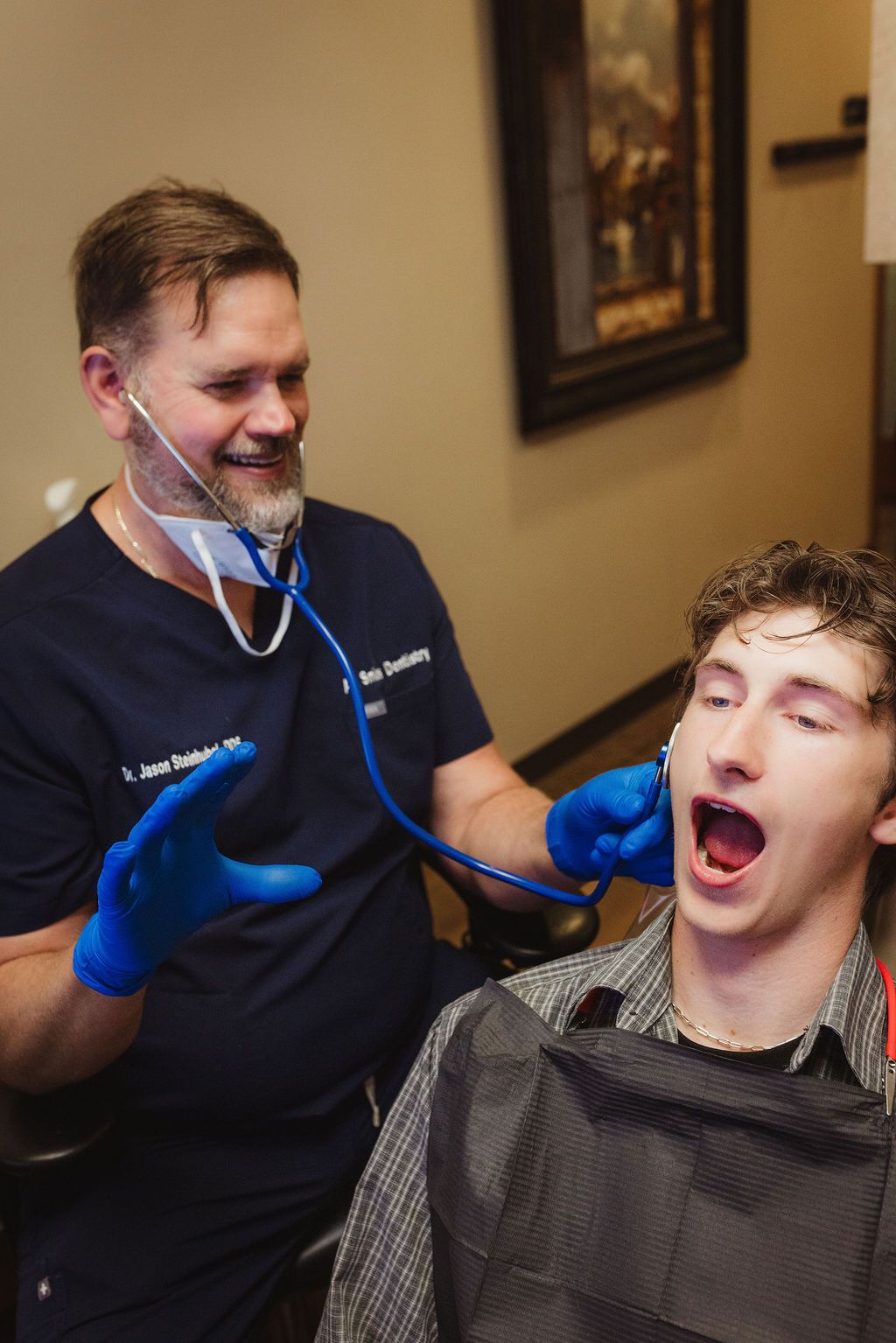
A tooth that cannot be saved can keep causing trouble, from spreading infection to ongoing pain that over-the-counter medicine does not relieve. Knowing when extraction is the right call and what the process involves can take much of the fear out of the decision.
At All Smiles Dentistry, we provide gentle, careful tooth extractions for patients throughout Lake Stevens and Snohomish County, in a calm, supportive office. Extractions are part of our restorative dentistry, so the same team can help you plan what comes next.
Not every damaged or painful tooth needs to come out, and we look at ways to save a tooth first. Still, some situations leave little room for alternatives: severe decay that has destroyed too much of the tooth, advanced gum disease that has weakened the bone supporting a tooth, a crack that extends below the gum line, or an impacted wisdom tooth that threatens neighboring teeth. In these cases, removing the tooth can protect the rest of your mouth from further harm.
Losing a tooth can change more than the gap itself. It can make chewing harder, and neighboring teeth can drift into the empty space over time, which can shift your bite. That is why we talk about replacement options before the extraction, not after it. Dealing with dental problems early gives you more choices and can protect the teeth around the gap.
A tooth that is badly damaged or infected usually does not get better on its own. Infection can spread to nearby gum tissue and, in serious cases, deeper into the jaw, and waiting can leave you with fewer treatment options. Swelling in your face or jaw needs prompt attention, so call us right away or see our emergency dentistry page. If you are unsure whether a tooth can be saved, an exam can tell you.
We look at ways to save a tooth before recommending removal. This table shows what we weigh first and when extraction may be the better choice.
| The situation | What we weigh first | When extraction may be better |
|---|---|---|
| Deep decay | A filling, or a crown if a filling would leave too little tooth | Too little healthy tooth is left to rebuild |
| A painful or infected nerve | Root canal treatment, which can often save the tooth | The tooth is too damaged to restore after treatment |
| A cracked tooth | Whether the crack can be held together with a crown | The crack runs below the gum line or into the root |
| Gum disease | Gum disease treatment to support the tooth | The bone around the tooth can no longer hold it |
| An impacted wisdom tooth | Monitoring, or planning for wisdom tooth removal | It threatens nearby teeth or causes problems |
We explain your options and why we recommend one, and the decision is yours.
The idea of having a tooth pulled can feel intimidating, but a well-planned extraction is often more manageable than people expect. We begin by numbing the area with local anesthesia, so you may feel pressure but should not feel pain. If you feel anxious, ask about nitrous oxide to help you stay relaxed throughout the visit.
A simple extraction is used when the tooth is visible above the gum line and can be loosened and removed with dental instruments. A surgical extraction is used when the tooth is impacted, broken at the gum line, or otherwise hard to reach. In either case, the goal is the same: to remove the tooth as cleanly and comfortably as possible while keeping as much surrounding tissue as the situation allows.
Recovery varies from person to person and from tooth to tooth. Keeping the extraction site clean, avoiding hard foods, not smoking, and following your aftercare instructions closely are the most important steps in a smooth recovery. We give you clear, specific aftercare guidance before you leave the office, and the recovery timeline below shows what to expect day by day.
Both types aim for the same result. Here is how they differ.
| Simple extraction | Surgical extraction | |
|---|---|---|
| When it is used | The tooth is visible above the gum line | The tooth is impacted, broken at the gum line, or hard to reach |
| What it involves | The tooth is loosened and lifted out with dental instruments | The gum may be opened and the tooth may be removed in sections |
| What you may feel | Pressure, not pain, with local anesthesia. Nitrous oxide is available | The same, and your dentist will explain anything extra before you begin |
| How we plan | Exam and digital x-rays | Exam and imaging, including 3D cone beam when the case calls for it |
Looking for third molars? See our page on wisdom tooth removal.
Healing differs from person to person, and your dentist’s instructions always come first. This is the general pattern.
If you have swelling in your face or jaw, call us right away.

Removing a tooth is often just one part of a longer treatment plan. Once the extraction site has healed, replacing the tooth can help protect your bite and keep neighboring teeth from shifting. Dental implants are a common choice because an implant replaces the tooth root as well as the visible tooth, and imaging checks your bone first. If you prefer a fixed option without an implant, a bridge may be a good fit, and our crowns and bridges page explains how it differs from a crown.
We do not treat an extraction as the end of the story. We work with you to map out a plan that fits your goals, your health, and your budget.
There is more than one way to fill the space. Dr. Izoh Ashour, a board certified periodontist and implantologist, and 3D cone beam imaging help us plan the right option.
| Option | How it works | What it needs | Often considered when |
|---|---|---|---|
| Dental implant | An implant placed in the jawbone, topped with a crown | Enough healthy bone, checked with imaging, and time to heal | You want to avoid altering the neighboring teeth |
| Bridge | A false tooth supported by crowns on the teeth beside the gap | Strong teeth on both sides of the gap | You prefer a fixed option that does not need surgery |
If the bone is thin, bone grafting may be recommended first.
We want you to know where you stand before treatment begins.
Dr. Jason Steinhubel opened All Smiles Dentistry in 2004, and our team has cared for patients across Lake Stevens and Snohomish County for more than two decades. We offer general and restorative dentistry under one roof, so the same team that guides you through an extraction can help you explore replacement options. We plan treatment with digital x-rays and 3D cone beam imaging, offer nitrous oxide for anxious patients, and keep our team tight-knit so your comfort comes first. Meet our team.
We are contracted with Delta Dental, Regents, and Primera, and we can help you look into what your other plan may cover. Financing is available through Cherry and CareCredit. See our insurance and dental financing pages. If you have a troubled tooth and want to talk through your options, schedule a consultation.
You should not feel pain during the extraction, because we numb the area with local anesthesia first. You may feel pressure or tugging. Once the numbness wears off, some soreness is normal, and your dentist will tell you how to manage it, including whether medicine is recommended. If you are nervous, ask about nitrous oxide.
You will get instructions for caring for your mouth at home, and your dentist’s instructions come first. A blood clot forms in the socket and works like a natural bandage, so most people are advised to avoid drinking through a straw, smoking, and rinsing hard in the first day. Ice on the outside of your cheek may help with swelling, and medicine may be recommended for discomfort. Healing time varies from person to person.
It depends on your situation. Sometimes an implant can be placed at the time of an extraction, and in other cases we recommend waiting a few months for the area to heal. Some patients need a bone graft first. An exam and imaging show which path is right for you. Contact us to talk about your dental implant options.
The fee depends on whether the extraction is simple or surgical, whether imaging is needed, and the tooth involved. We give you an estimate at your visit. We are contracted with Delta Dental, Regents, and Primera, and we can help you look into what your other plan may cover. Financing is available through Cherry and CareCredit. See our insurance and dental financing pages.
According to MedlinePlus, dry socket happens when the blood clot is lost or does not form well, which leaves the bone exposed to the air. Its main sign is severe pain 1 to 3 days after the tooth is pulled, sometimes with a bad taste or smell. Protecting the clot helps, so follow your dentist’s instructions and avoid straws, smoking, and hard rinsing early on. If your pain gets worse or medicine does not help, call us.
Sometimes. Depending on the tooth, a filling, a crown, or root canal treatment may save it. We look at those options first and recommend extraction when too little healthy tooth is left or the tooth cannot be restored.
Our team always listens to your concerns and gets to know you before customizing your experience to your needs. We want to ensure your comfort while bringing you the best treatments modern family dentistry has to offer.
Feel relaxed at your Lake Stevens dentist as our team takes great care of you. If you’re feeling nervous, our nitrous oxide or conscious sedation options can put you at ease. We’re in good hands here. Feel relaxed at your Lake Stevens dentist
Each time you visit, expect the same level of high-quality care with modern technology and your own dedicated provider. Discover more effective and gentle dentistry with digital imaging, lasers, same-day crowns, and more.

Dr. Jason Steinhubel opened All Smiles Dentistry in Lake Stevens in 2004 to give the community he loves a better dental experience. A member of the American Dental Association, he brings a background in forensics, dental assisting, and dental lab work to a technology-forward, family-focused practice built on prevention, education, and comprehensive care under one roof.
View Dr. Steinhubel's full profile